Illustrative reconstruction of a dehumidifier and air mover staged in a UK room before a drying plan begins

Room drying help for UK homes

Damp room, fixed leak or flood? Start here.

Check safety first, choose equipment for the actual conditions and keep simple readings as the room dries.

Staged illustration · not a real customer job

FirstCheck safety
ThenStop the source
NextChoose the setup
Keep checkingRepeat readings
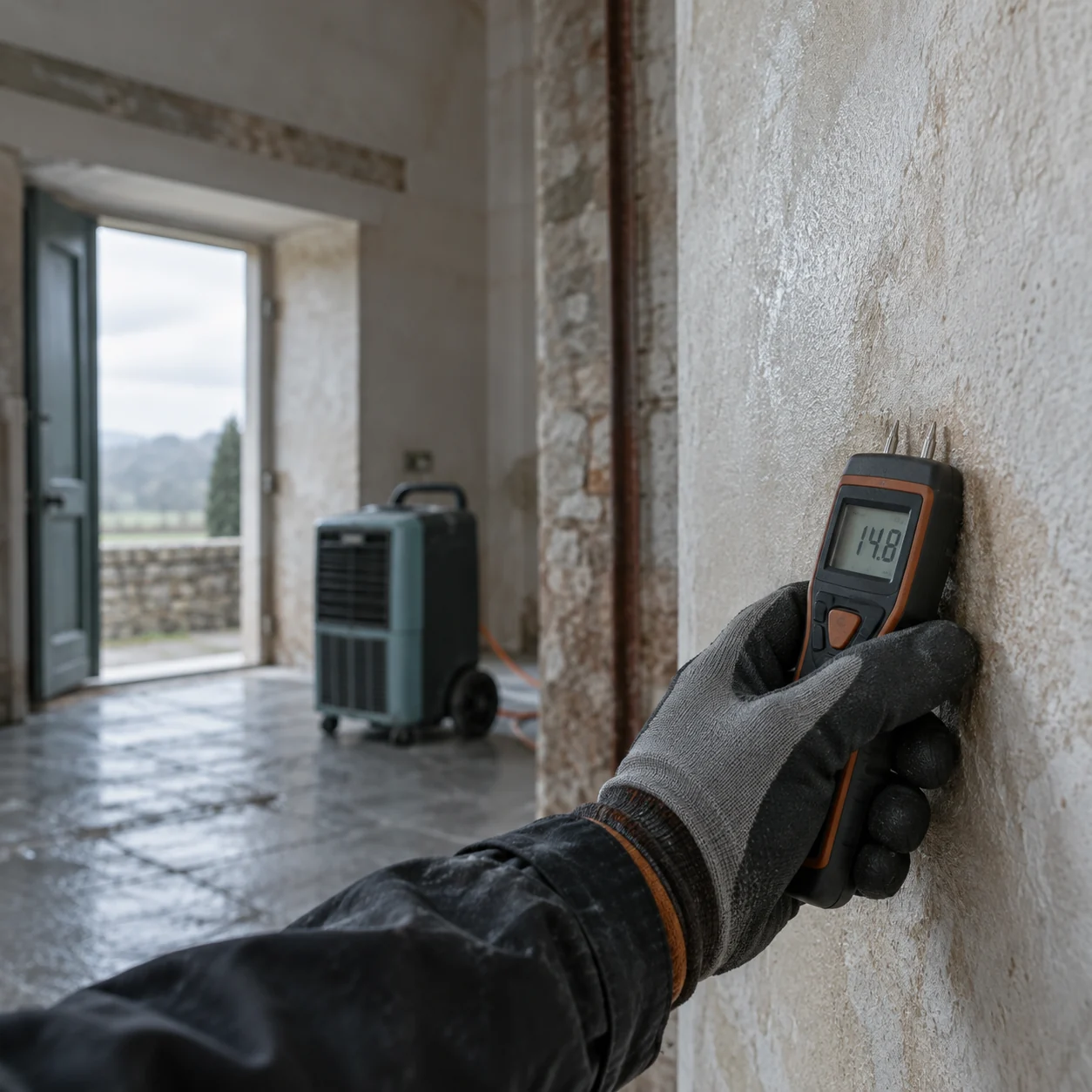
A gloved hand taking a material moisture reading from plasterCHECK 01
Repeat the same measurement

Measure the same spots each time.

Name the room and exact spot, note the meter and return to it later. A reading is useful when you can compare it with the same place under known conditions.

Write downTime, room, exact spot, meter, temperature, RH and what equipment was running.
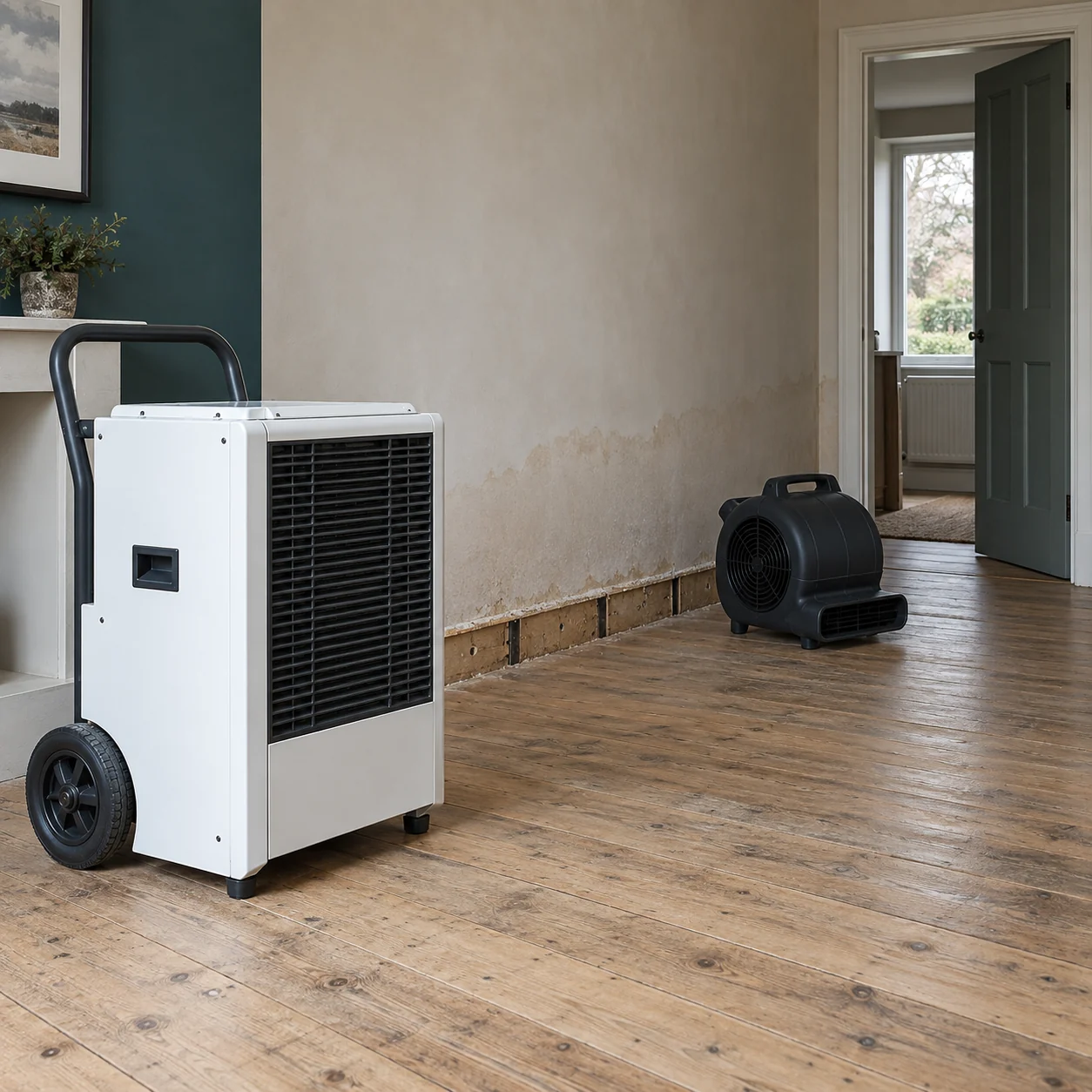
Dehumidifier and air mover staged on a dry floor before operationCHECK 02
Set up before you switch on

Give the air a clear route.

Keep inlets and outlets clear, protect cables and drain hoses, and follow the instructions for the exact equipment. Check that the air reaches the part of the room you intend to dry.

Before powerConfirm the source, electrical safety, operating range, placement and drainage.

Useful numbers, without the guesswork.

Estimate room airflow, running cost and tank-emptying time, or compare two sets of readings. Everything stays in your browser.

Room volume48.0 m³
Equipment airflow240 m³/h
Air changes5.0 / hour
One change12 min
Example resultRoom airflow calculator

This is the on-paper airflow figure. Real mixing changes with placement, doors, furniture and resistance.

Need help choosing equipment?

Compare by room temperature, drainage, noise and whether you need to buy or hire.

Choose a dehumidifier
Stop here ifIf water may have reached gas or electrical systems, do not energise drying equipment until the relevant supply and equipment have been checked.